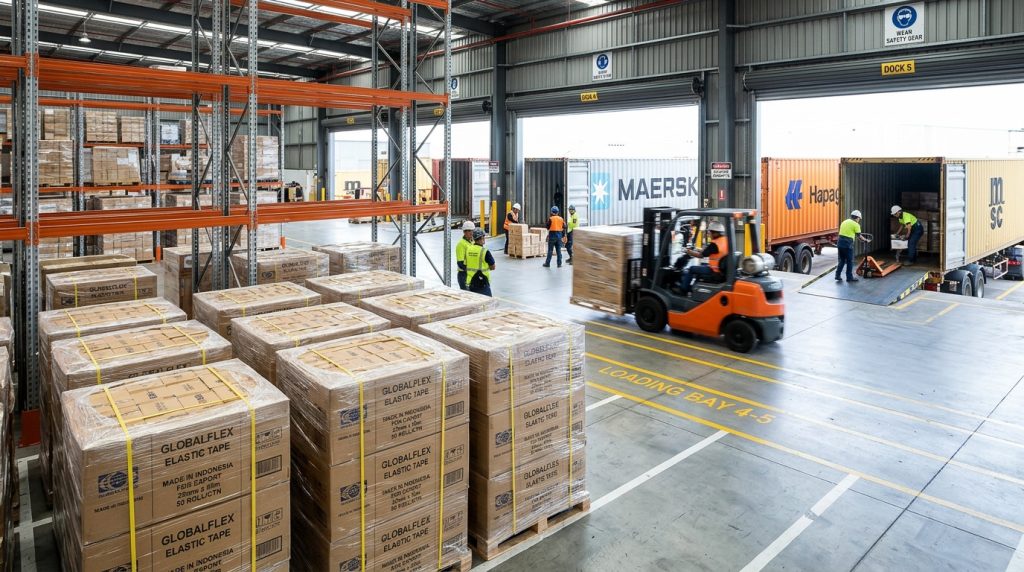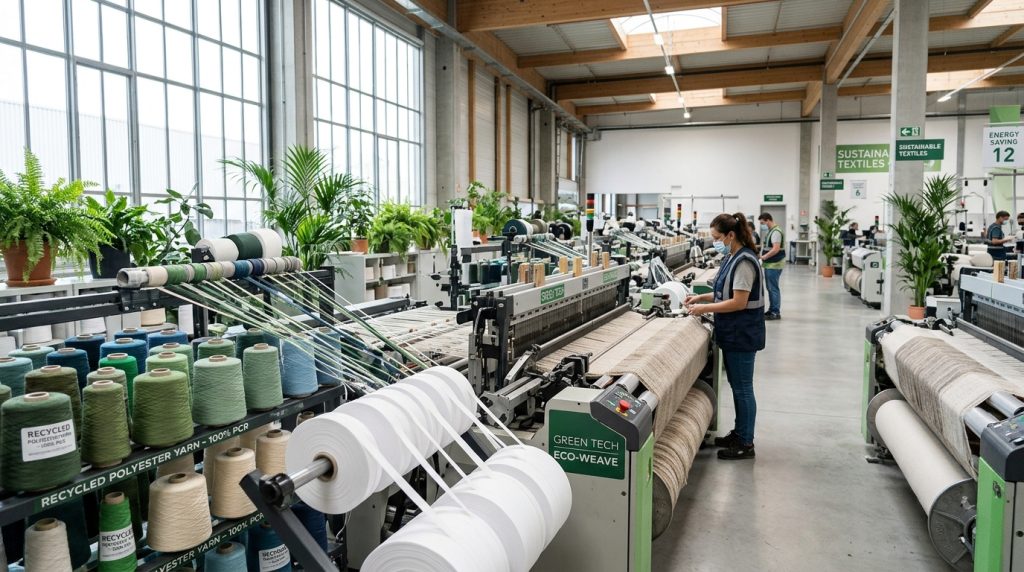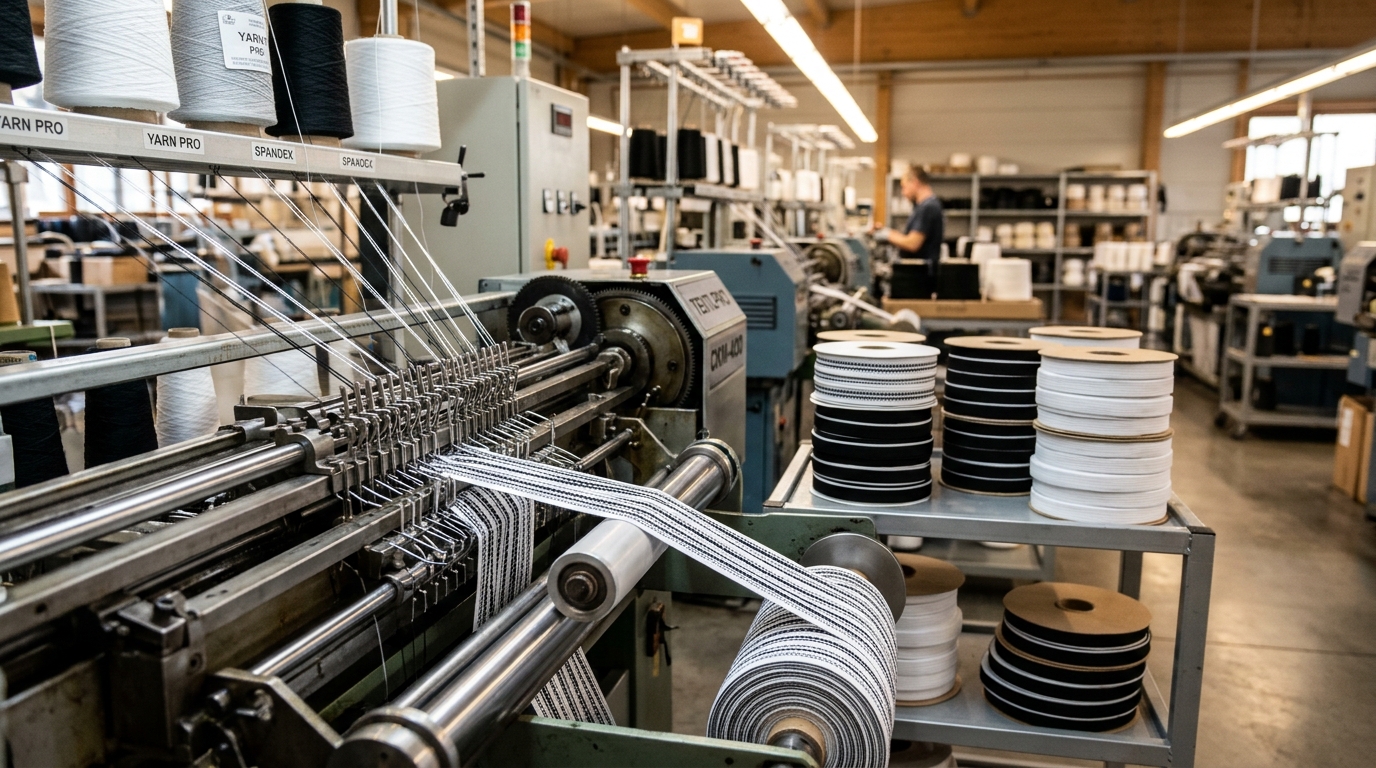
In modern apparel manufacturing, trims are far more than aesthetic accents—they provide structural support, body conformance, and wearing comfort. Among all stretch trims, knitted elastic tape stands out as the most versatile, cost-effective, and durable option across the global textile supply chain.
Whether you are designing activewear, innerwear, children’s clothing, or industrial uniforms, choosing the right knitted elastic can mean the difference between a high-performing garment and customer returns. Here is a comprehensive guide from the engineering team at Krishna Overseas.
Key Takeaway at a Glance
Knitted elastic tapes are manufactured on warp crochet knitting machines. Unlike woven elastic, knitted tapes maintain consistent width when stretched and will not narrow down, ensuring maximum comfort against the skin.
1. Knitted Elastic vs. Woven Elastic: Key Differences
When selecting elastic for garment production, merchandisers often compare knitted and woven structures. Here is how they compare:
- Structure & Flexibility: Knitted elastic is made with warp knitting crochet technology where parallel rows of loops interlock around elastomer cores. This gives it a softer hand-feel, lightweight profile, and flexible drape compared to rigid woven tapes.
- Behavior Under Tension: Knitted elastic does not narrow down (neck-in) when pulled lengthwise, making it optimal for direct skin-contact garments like underwear waistbands and sportswear cuffs.
- Needle Penetration Resilience: Because of its looped structure, needle holes during garment sewing do not rupture the internal rubber threads, virtually eliminating fraying and stitch-induced degradation.
2. Standard Widths & Specifications Available
Krishna Overseas manufactures knitted elastic in a full spectrum of widths engineered for specific garment applications:
| Width (mm) | Standard Elongation | Typical Garment Application |
|---|---|---|
| 6 mm – 8 mm | 130% – 150% | Lingerie straps, surgical masks, necklines, baby apparel |
| 10 mm – 15 mm | 120% – 140% | Sleeve cuffs, undergarment leg openings, swimwear |
| 20 mm – 32 mm | 110% – 135% | Boxer brief waistbands, pyjama drawbands, track pants |
| 38 mm – 50 mm | 100% – 125% | Gym leggings, sportswear belts, orthopedic supports |
3. Raw Materials & Tension Calibration
The performance of knitted elastic depends directly on the balance between warp yarns and rubber threads:
- Warp & Weft Yarns: High-tenacity textured polyester filaments or soft nylon 6/6.6 provide abrasion resistance and rich color fastness.
- Core Elastic Thread: High-grade natural rubber or elastane (spandex) threads calibrated for recovery force and thermal resistance during garment laundering.
“A superior knitted elastic tape must sustain its dynamic modulus even after 50 continuous domestic laundering cycles without curling or losing elasticity.”
— Krishna Overseas Quality Assurance Laboratory
4. Customization Capabilities at Krishna Overseas
At Krishna Overseas, our Ahmedabad manufacturing facility operates state-of-the-art crochet looms capable of delivering customized specifications tailored to international buyer tech packs:
- Custom widths calibrated to fraction-of-millimeter precision.
- Custom weight per meter (GSM) and elongation ratios.
- Pantone-matched color shades and OEKO-TEX certified dyed yarns.
- Export-ready bulk roll packing with moisture-barrier packaging.
Looking to elevate your next garment collection with high-grade knitted elastic tapes? Contact Krishna Overseas today to request sample swatch cards and factory-direct wholesale pricing.