Sustainability is no longer a corporate buzzword in the textile industry—it is an urgent operational standard. As international garment buyers in Europe, North America, and Australia commit to rigorous carbon reduction and eco-compliance targets, Indian narrow fabric manufacturers are modernizing with eco-friendly innovations.
From adopting 100% recycled post-consumer polyester (rPET) yarns to optimizing factory solar energy, India’s elastic tape manufacturing sector is emerging as a responsible, forward-thinking global partner. Here is how Krishna Overseas contributes to a greener textile future.
Green Manufacturing in Practice
Switching one ton of virgin polyester to certified recycled polyester (rPET) in elastic tape production saves approximately 1.5 tons of carbon emissions and reduces water consumption by up to 50%.
1. The Rise of Recycled Polyester (rPET) in Knitted Elastics
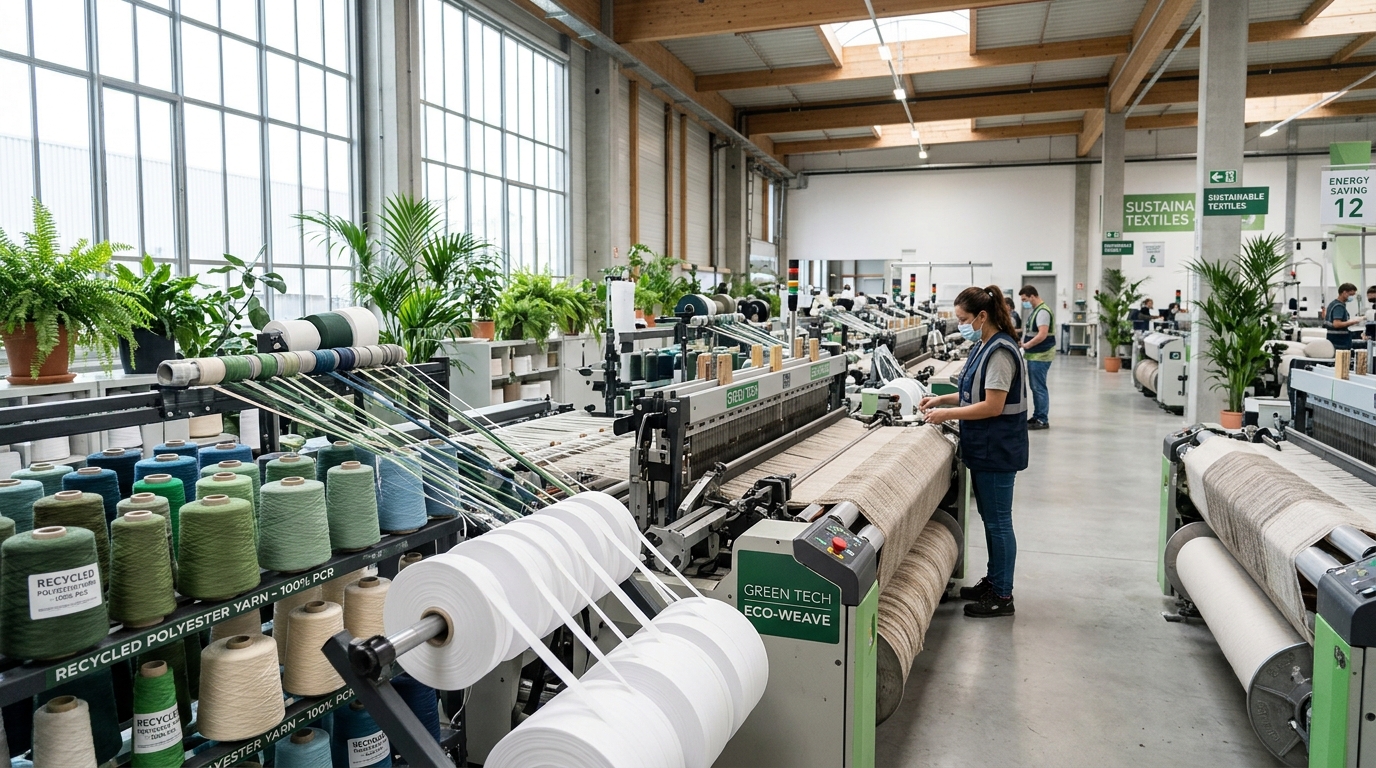
Traditionally, polyester filaments used in elastic tapes were synthesized from virgin petroleum derivatives. Today, advances in spinning technology allow manufacturers to utilize high-tenacity yarn extruded from recycled PET plastic bottles.
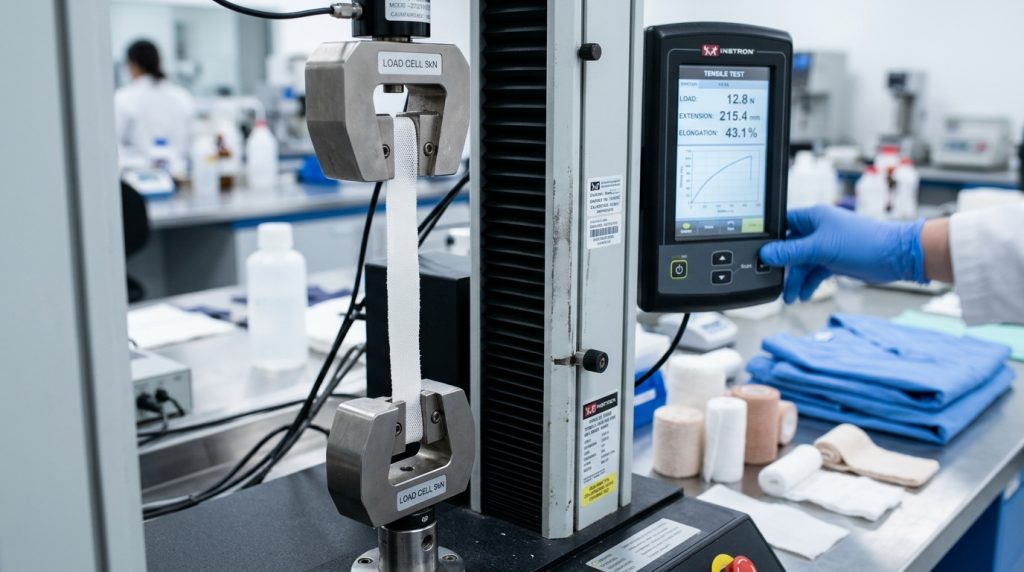
- Identical Tensile Strength: Modern rPET yarns deliver tensile strength and elongation characteristics virtually indistinguishable from virgin polyester.
- Consistent Dye Uptake: Enhanced yarn purity ensures deep, uniform color absorption without streakiness or fading.
- Traceability: Certified supply chains ensure genuine recycled pedigree with Global Recycled Standard (GRS) documentation.
2. Energy Efficiency on the Loom Floor
High-volume elastic production requires continuous operation of crochet knitting looms. At Krishna Overseas, investments in modern European drive motors and variable frequency drives (VFDs) have significantly minimized kilowatt consumption per kilometer of produced tape.
Furthermore, clean factory environments with automated dust extraction protect machine components, extending equipment lifespan and minimizing industrial waste.
3. Chemical Safety & OEKO-TEX Standard 100 Compliance
Elastic tapes often come into close contact with the wearer’s skin. Ensuring zero residue of hazardous substances is a non-negotiable benchmark for global fashion exports.
| Safety Parameter | Standard Industry Requirement | Krishna Overseas Eco Protocol |
|---|---|---|
| Heavy Metals (Lead, Cadmium) | Strict regulatory thresholds | Non-detectable / Zero heavy metal dyes |
| Formaldehyde Residue | < 75 ppm for skin contact | Completely formaldehyde-free processing |
| pH Value of Finished Elastic | 4.0 – 7.5 (Skin compatible) | Balanced neutral skin-friendly pH range |
4. Biodegradable and Minimalist Packaging
Sustainable initiatives extend beyond the product itself to its export logistics. Krishna Overseas has replaced traditional non-recyclable packing materials with:
- Recyclable cardboard reel cores and heavy-duty corrugated cartons made from post-consumer recycled pulp.
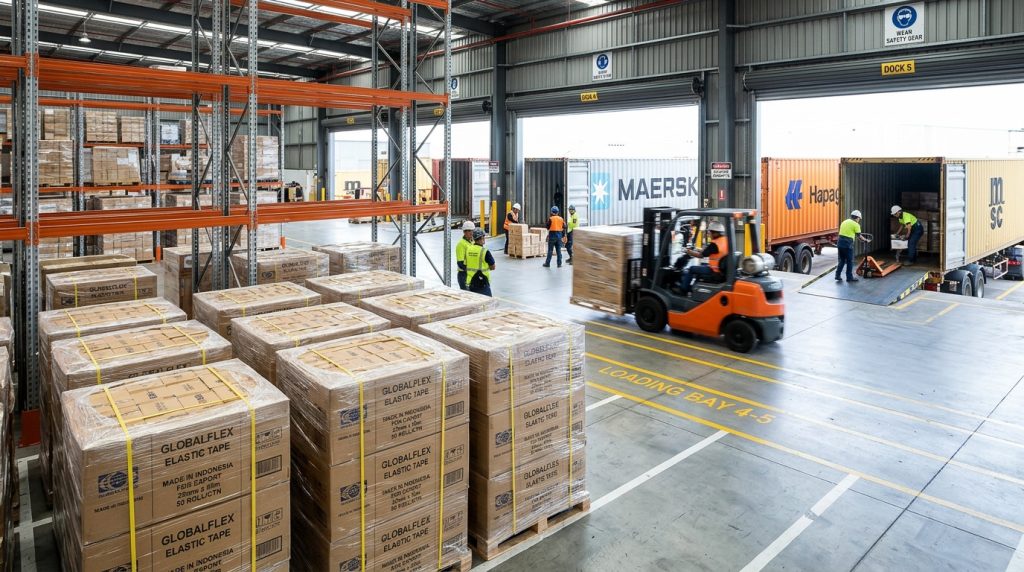
- Optimized carton nesting dimensions to maximize sea container space and reduce logistics freight footprints.
“Responsible manufacturing is an ongoing journey of continuous improvement. We take pride in offering global brands elastic tapes that meet stringent quality benchmarks while respecting our planet.”
— Leadership Team, Krishna Overseas
Are you looking to transition your brand’s trim inventory to sustainable, certified narrow fabrics? Connect with our technical consultants to discuss eco-friendly knitted elastic options today.